The Word صُومْ/صُمْ and صِيَامٌ are transformations of the same Word
The Word "Saum" and "Siyam" are transformations of the same word, the proof is submitted as follows:

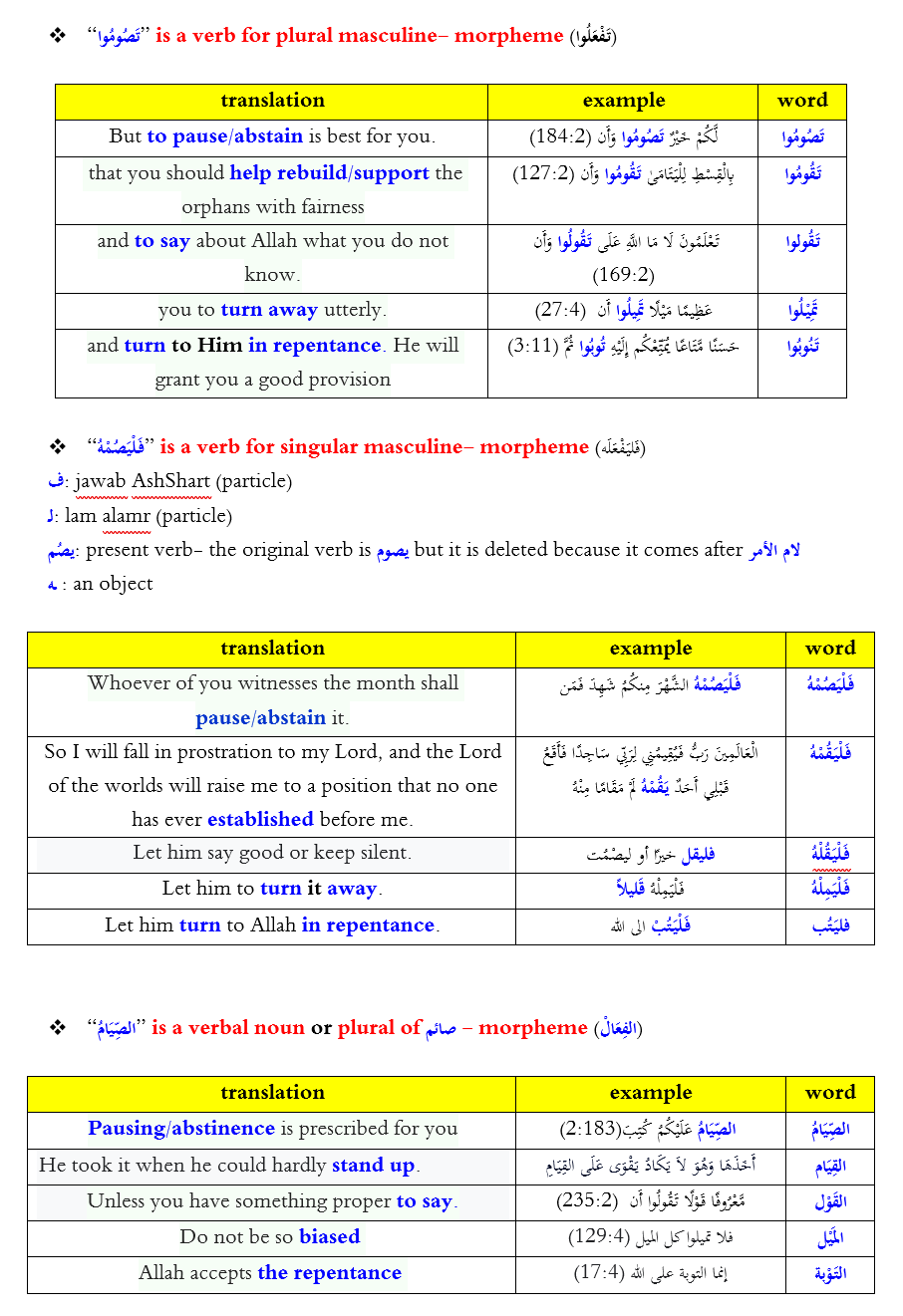
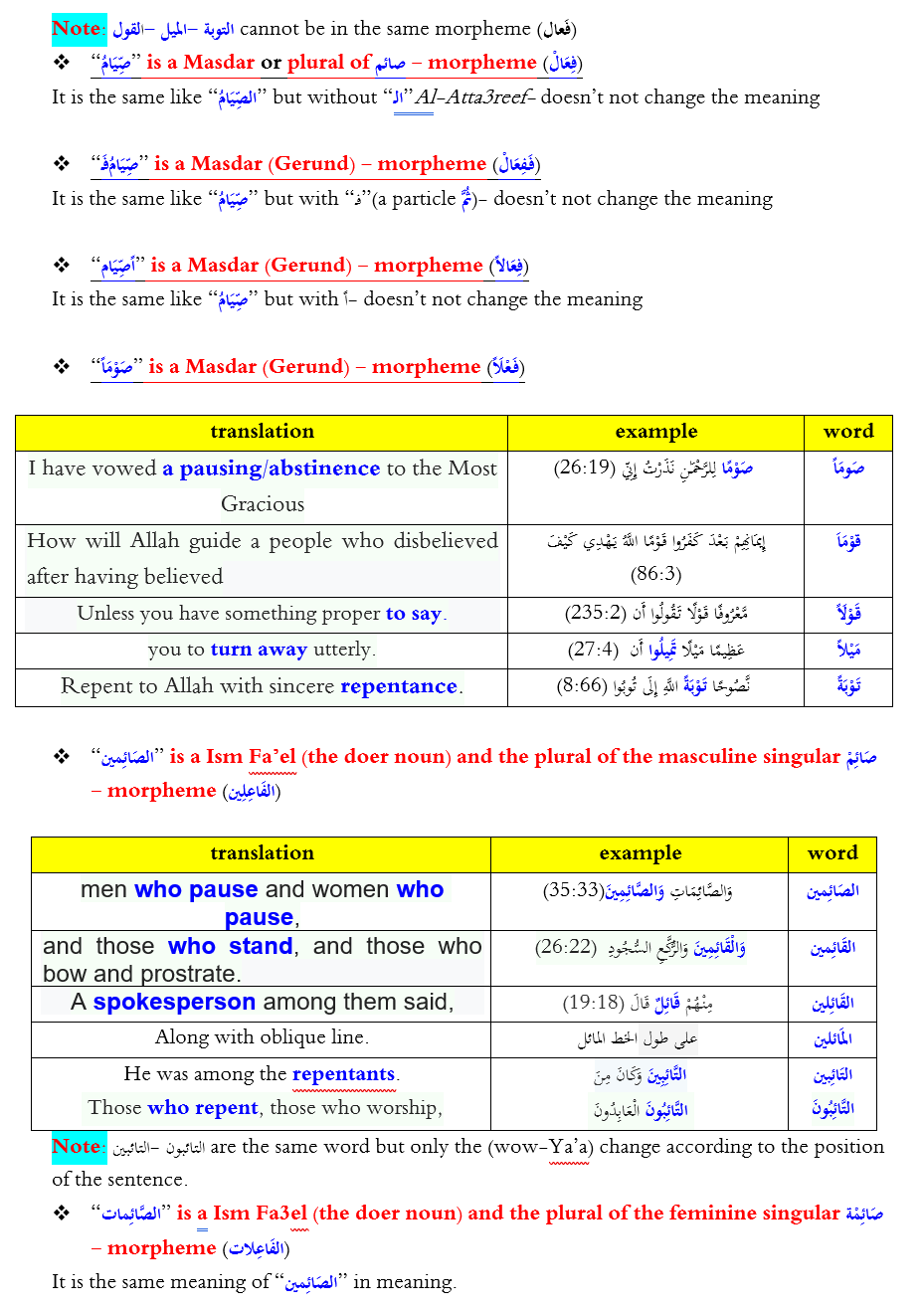
The Word "Saum" and "Siyam" are transformations of the same word, the proof is submitted as follows:
But in the Quran, they refer to two totally different concepts.
@Marvelous Quran , Salamun Alaikum,
If we do an analysis of the word أَنۢبِيَآءَ (which is a broken plural, which means that the action does not have any zaman or time associated with it) and which appears in 2:91 which starts with "When it is said to them" which clearly does not have a time (past or present) associated with it and 5:20, could perhaps be better translated keeping into consideration that the tense used for the Nabi is continuous, plus the word يُؤۡتِ is used which is Mudare3.
The other plurals النَّبِيُّونَ and النَّبِيِّينَ which are "active participant Doer" and which appear in the ayat 2:61, 2:213, 3:21, 3:81, 4:69, 17:55, 19:58 33:7, 33:40 and the other one النَّبِيُّونَ in 2:136 where the names are mentioned and the concept of time and past tense is evident and 5:44, where again the concept of past tense is evident.
So if we can retranslate the 5:20 to show that it is perhaps an ongoing activity that Musa told his people, would you still hold that these words are referring to totally different concepts?
A siyum (Hebrew: סיום) ("completion"), in Judaism, occasionally spelled siyyum, is the completion of any established unit of Torah study. The most common units are a single volume of the Talmud, or of Mishnah, but there are other units of learning that may lead to a siyum.
The typical structure of a siyum event includes a conclusion of the study, reading of the Hadran text, kaddish, and a celebratory meal.
In Sanskrit Sayyam means control of the senses, Concentration of the mind
If we look at most verses for Taqwa"discipline" they all guide us to attain Quranic understanding and reading, which is the ultimate goal of Siyam as per ayat 2:183
.بِسْمِ اللّٰهِ الرَّحْمٰنِ الرَّحِيْمِ
يٰٓـاَيُّهَا الَّذِيۡنَ اٰمَنُوۡا كُتِبَ عَلَيۡکُمُ الصِّيَامُ کَمَا كُتِبَ عَلَى الَّذِيۡنَ مِنۡ قَبۡلِکُمۡ لَعَلَّكُمۡ تَتَّقُوۡنَۙ
Al-Quran - Surah 2 - Al-Baqara - Ayah 183
Need to confirm more iA.
I'm saving that first image with the 10 measures.
The more resources on morphological functions, the better.
Much appreciated
صم۔ stand still. Be hard like stone. Act like deaf to others.
to be deaf, as in , he sent down the book in ramadhan so (to be deaf / no other opinions enters your ears, except opinions only from Allah,
Perfect.
I do not have this in depth understanding of Arabic grammar and morphology. So I am not able to comment in detail. However from the chart you presented,
قام , یقومو, قیامة have same base meaning of restoration , but قوم is a different word (meaning people).
صام، یصومو، صیام have same set of morphology as 1st , so we can say they are related with each other. But صوم is same as قوم, and high possibility of having a different meaning.
Though they both have base meaning of abstaining, and object of abstaining may have impact on the meaning.
For example, علم (placed marking) and علم (taught), same word but different meanings. I am not equating this with example of sawm. But the possibility of having a different meaning is plausible, even if the words are from same root.
I have not studied other related concepts, yet. I will get back on it once I study those, InshaAllahh!
رب اھدنی لاقرب من ھذا رشدا
قیام۔ قام۔ قوم ا۔ و۔ ی۔ vowels do not make root words. It’s proto root is قم۔ means. Promote. Proceed. Highlight. Sumit. Top up. Assemble.